
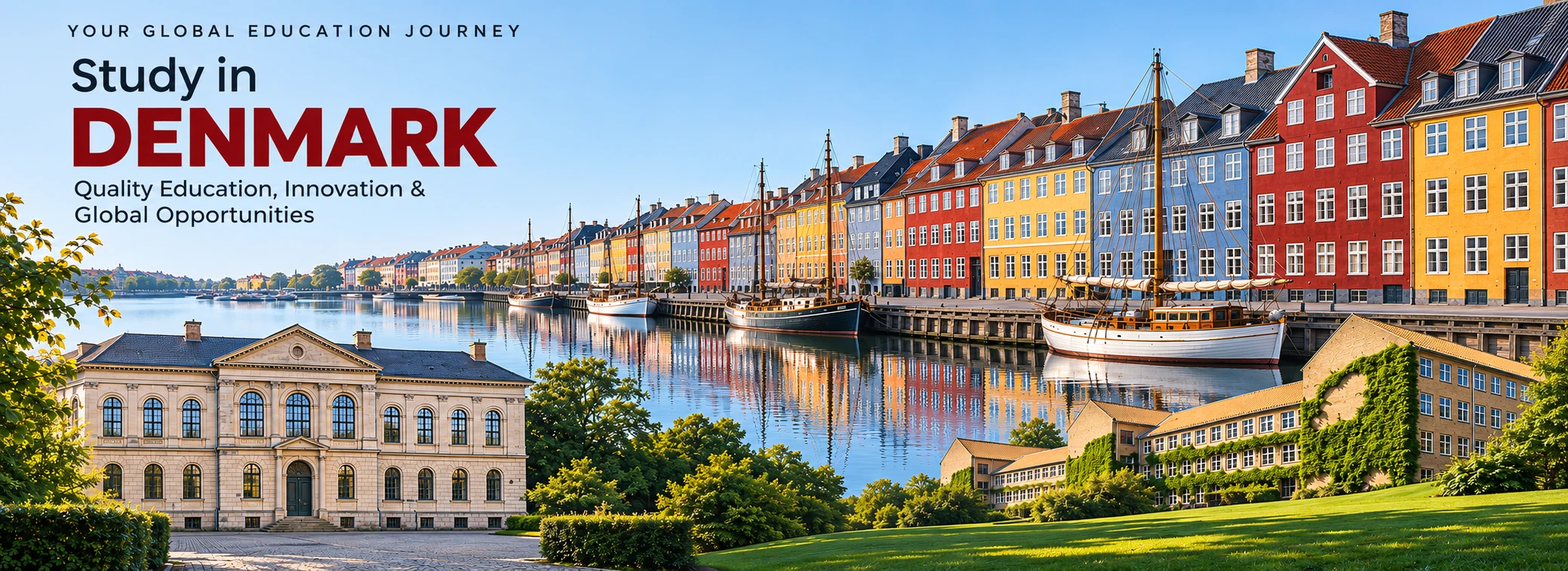
Study in Denmark: Quality Education, Innovation & Global Opportunities
Denmark is a leading Scandinavian study destination, renowned for its high quality of life, excellent safety standards, sustainability, and innovation-driven society. With a welcoming multicultural environment and widespread English proficiency, Denmark offers international students an enriching academic and lifestyle experience.
Overview of Denmark
- Language: Danish is the official language, while English is widely spoken, making everyday communication and student integration easier for international students.
- Lifestyle & Culture: Denmark offers a progressive society, strong social welfare system, sustainable urban living, and an excellent public transportation and cycling infrastructure.
Higher Education System & Academic Excellence
- Types of Institutions: Denmark offers three main types of higher education institutions:
- Research Universities: Such as the University of Copenhagen, Aarhus University, Technical University of Denmark (DTU), and Copenhagen Business School (CBS).
- University Colleges: Focus on professional bachelor's degrees and practical, career-oriented education.
- Business Academies: Provide applied, industry-focused programs and short-cycle higher education.
- Degree Structure: Denmark follows the European Bologna framework and ECTS credit system:
- Bachelor's: Typically 3 years (180 ECTS credits).
- Master's: Typically 2 years (120 ECTS credits).
- Ph.D.: Typically 3 years.
- English-Taught Programs: More than 500 degree programs are available in English, offering diverse academic opportunities for international students.
- Teaching Approach: Emphasizes interactive learning, teamwork, critical thinking, project-based education, and close collaboration with industry and research institutions.
Tuition Fees & Living Expenses
- Non-EU/EEA Students: Annual tuition fees typically range from €6,000 to €16,000, depending on the institution and program.
- Living Costs: Students should budget approximately €1,000–€1,700 per month for accommodation, food, transportation, and other personal expenses.
Scholarships & Financial Support
- Scholarship Opportunities: International students may access Danish Government Scholarships, university-specific merit-based awards, and international funding programs such as Erasmus Mundus.
- Financial Assistance: Scholarship coverage varies by program and institution and may include partial or full tuition fee waivers and, in some cases, living-cost support.
Work Opportunities & Student Visa
- Non-EU/EEA Students: Eligible students enrolled in state-approved higher education programs can generally work up to 90 hours per month from September to May and full-time during June, July, and August.
- Residence Permit & Healthcare: Non-EU/EEA students must obtain a Danish student residence permit, meet financial documentation requirements, and arrange appropriate health insurance. After registering their Danish address and obtaining a CPR number, eligible residents can access the Danish public healthcare system.
Denmark combines internationally recognized education, practical learning, innovative teaching, and an exceptional quality of life, making it an attractive destination for students seeking a competitive European education and promising international career opportunities.