
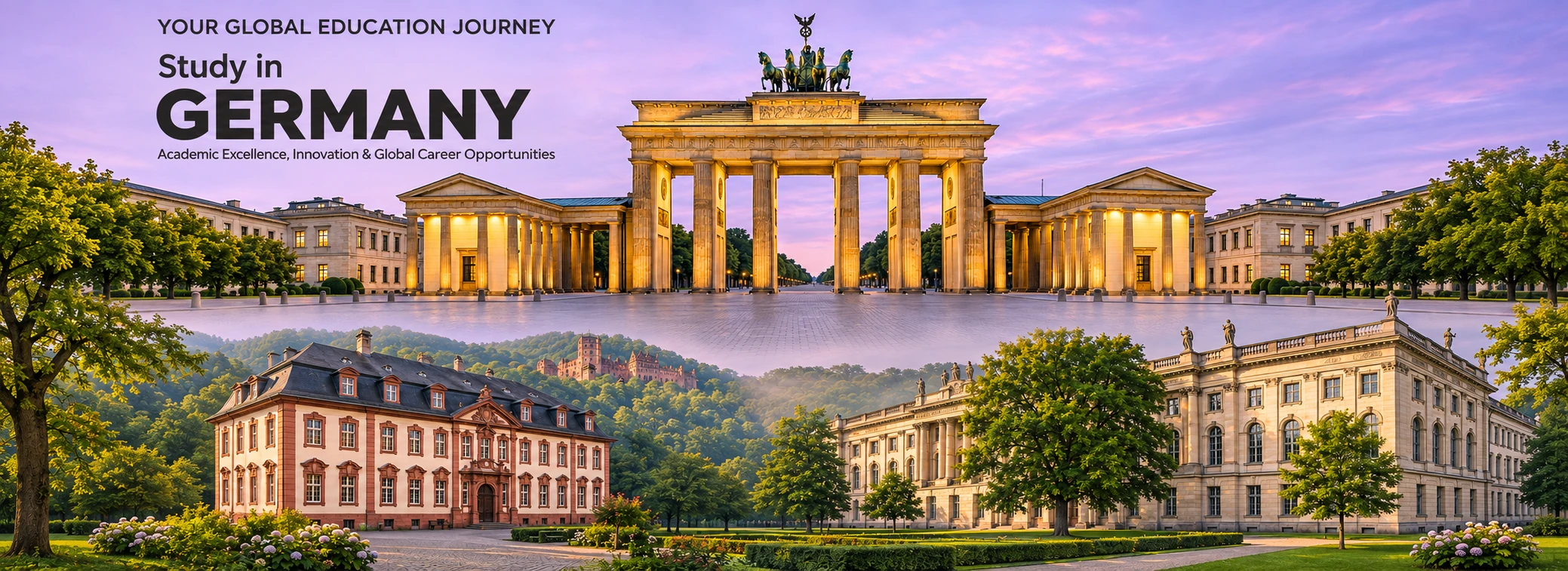
Study in Germany: Academic Excellence, Innovation & Global Career Opportunities
Germany is one of the world's leading higher education destinations, attracting hundreds of thousands of international students through its globally recognized universities, strong research culture, advanced technology, and affordable education. Its industry-oriented academic system and excellent career prospects make Germany an attractive destination for students seeking internationally competitive qualifications.
Higher Education System & Academic Excellence
- Types of Institutions: Germany offers three major categories of higher education institutions:
- Research Universities (Universitäten): Focus on academic education, scientific research, and doctoral studies.
- Universities of Applied Sciences (Fachhochschulen/UAS): Emphasize practical learning, industry collaboration, and professional skills.
- Specialized Institutions: Offer programs in art, design, music, film, and related creative disciplines.
- Affordable Tuition: Most public universities charge no general tuition fees for international students, although semester contributions typically range from €100 to €400. Certain states, institutions, and programs may impose additional tuition fees. Private universities generally charge higher fees.
- Internationally Recognized Degrees: Germany follows the European Bologna framework:
- Bachelor's: Typically 3–4 years (180–240 ECTS credits).
- Master's: Typically 1–2 years (60–120 ECTS credits).
- Doctorate (Ph.D.): Duration varies by discipline and research requirements.
- English-Taught Programs: Thousands of international degree programs, particularly at the master's level, are available entirely in English.
Living Costs & International Student Support
- Cost of Living: Students should budget approximately €1,000–€1,150 per month for accommodation, food, transportation, health insurance, and other essential expenses.
- Student Support: Universities provide access to academic guidance, libraries, research facilities, accommodation assistance, career counseling, and international student services.
Work & Post-Study Career Opportunities
- Part-Time Employment: International students from non-EU countries can generally work up to 140 full days or 280 half days per calendar year, subject to applicable residence regulations.
- Post-Study Opportunities: Eligible international graduates can apply for an 18-month residence permit to seek qualified employment related to their academic qualifications.
- Career Development: Germany's strong industrial base, particularly in engineering, automotive technology, IT, healthcare, business, and research, offers valuable opportunities for skilled international graduates.
Germany combines world-class education, affordable study options, advanced research facilities, and excellent post-graduation opportunities, making it an outstanding destination for students aspiring to build successful international careers.