
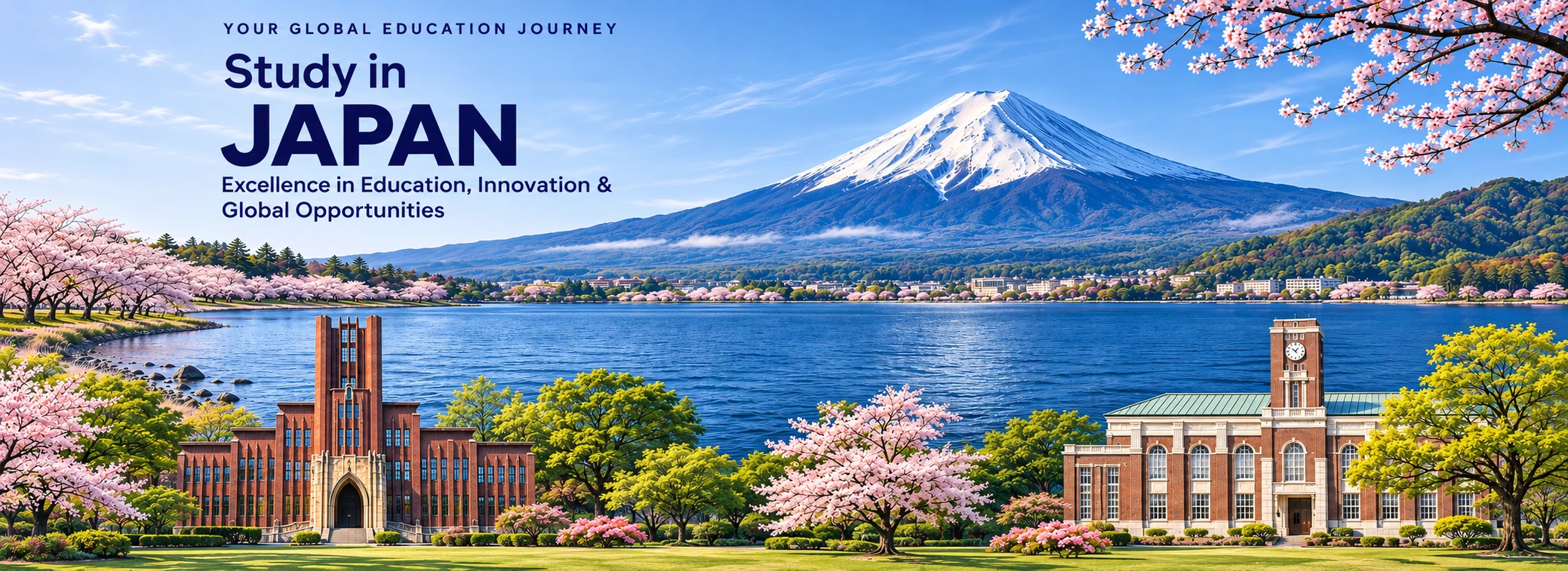
Study in Japan: Excellence in Education, Innovation & Global Opportunities
Japan is a leading study destination in East Asia, renowned for its academic excellence, technological innovation, high safety standards, and world-class educational infrastructure. It offers international students a unique opportunity to gain globally recognized qualifications in a safe, disciplined, and innovation-driven environment. Japan combines academic excellence, cutting-edge technology, and valuable international exposure, making it an attractive destination for students seeking quality education and global career opportunities.
Overview of the Japanese Education System
- Education Structure: Follows the 6-3-3-4 system: six years of elementary, three years of lower secondary, three years of upper secondary, and typically four years of undergraduate education.
- Academic Calendar: The academic year generally runs from April to March, with selected international programs offering October admission.
- Compulsory Education: Nine years of compulsory education, covering elementary and lower secondary levels.
Higher Education Institutions & Facilities
International students can choose from five major types of higher education institutions, including national, public and private institutions:
- Universities (Daigaku): Offer undergraduate, master's and doctoral programs.
- Junior Colleges (Tanki Daigaku): Provide typically two- to three-year programs focused on academic and professional education.
- Colleges of Technology (Kosen): Offer specialized, practice-oriented education in engineering, technology, and applied sciences.
- Specialized Training Colleges (Senmon Gakko): Deliver career-focused vocational and professional training aligned with industry needs.
- Graduate Schools: Provide advanced academic, research, and professional degree programs.
Key Opportunities & Support for International Students
- English-Taught Programs: A growing number of universities offer full degree programs and individual courses in English, providing opportunities for students without advanced Japanese-language proficiency.
- Scholarships & Financial Aid: International students can access funding opportunities through the Japanese Government's MEXT Scholarship, JASSO, and various private foundations.
- Part-Time Employment: Eligible international students with the required work permission can work up to 28 hours per week during academic sessions and up to eight hours per day during designated long vacations.
- Modern Campus Facilities: Universities offer advanced research laboratories, extensive library networks, international student support centers, and affordable student accommodation.